The book’s business

Standard

I gather my stories–

The Other Side of Resistance: Stories of Living Beyond Dying is written around eight stories of mine.

Not just any stories. It’s not a memoir.

These are stories I tell.

I claim them as “mine” for a few reasons. Not because the stories “happened” to me but because they came to me. Maybe repeatedly, in dreams as real as the point of death. Maybe in broad daylight, with a sense of time and place as real as the kitchen I stand in. They “happened” to someone else, but I stood in their world, seeing and hearing and smelling and feeling it just as it happened to them, as if it happened to me.

I tell them because of the compelling feeling of immediacy, significance, and truth they carry. I’m caught in the primacy of experience with them and it resonates through me. That resonance, which carries the excitement of a party, is the arrival of the opportunity the experience holds for me. This is the reason I believe the stories come.

I don’t believe I’m alone in the experience of stories and variations of stories, either.

I believe you can gather yours–stories caught in coincidences and synchronicities, daydreams and night dreams, epiphanies, deja vu, clairvoyance, and sudden knowings–to see what their uniting tells you.

Why we’d do it–the gathering of them, the juxtapositioning of them, creates another story. It’s like doing a reading of seven tarot cards rather than reading just one. Each informs the whole. For example, I put together what could be considered “past life” stories, one set in the French Revolution and one in a medieval English field. They led me to a story about the Twin Towers’ jumpers on September 1, 2001.

You get your own proof of a larger, more encompassing story of life, outside the mainstream story we’re all been taught. For example, I could no longer believe in death after sharing the stories of some who had died. Yes, we leave this “now” life, but I could see that we enter a larger field of activity. In this “now” life, the stories give us real equipment for living this “now,” rather than following a social or cultural model or someone else’s advice for what to believe and how to live.

The idea is that the stories are not random tales that crop up at unpredictable times for no reason. I began to see that hey are guidance that comes at our request, when we need it. They show us where we want to go and how to lead ourselves there.

Those stories come for their own reasons, too. There’s a reciprocity of resonance in operation that benefits all sides.

So, it seems useful to know our own stories.

And exciting, as it expands my understanding of how extensive our reach is across more connections than we can imagine.

Tomorrow we’ll start with a story.
Standing Rock: “Where do I go to get arrested?”

Standard

police-with-peace-demonstrators-p
Vietnam War protest (history.com)

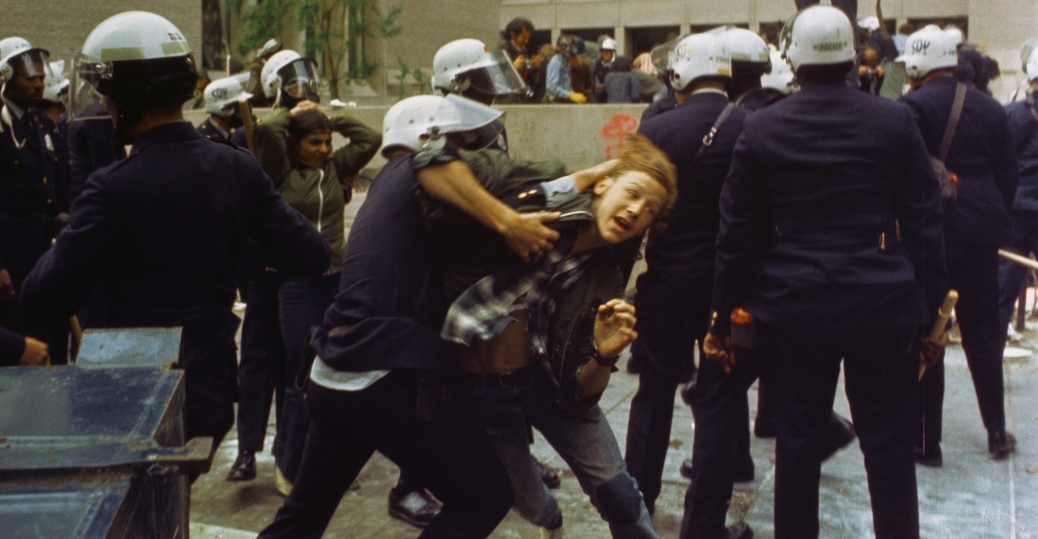
“Where do I go to get arrested?” said the Baby Boomer, grinning, come to relive his glory days. He could tell them a few things about being arrested. He’s been beaten by cops, maced, teargassed, threatened, thrown in jail, at an array of protests ranging from the Civil Rights Movement, Republican and Democratic National Conventions in’68, Vietnam War protests in ’67, Redwood Summer in ’90, Iraq War protests in ’02, and more.

chicago-dem-convention-1968
Democratic National Convention 1968.

The action of stepping up, ready to give his all, has defined his life and his sense of himself. He’s an elder now, prepared to share what he’s learned, maybe receiving a little recognition, maybe leaving a legacy. It’s great to feel useful again, in this most meaningful way.

Well, not at Standing Rock.

His experience, his brains, his charm, his degrees, his titles, his money, his expectations–none of it matters here. This is not a repeat of those protests, even though the police respond against unarmed people in the same old unnatural, unbelievably harsh ways.

Integration.jpeg

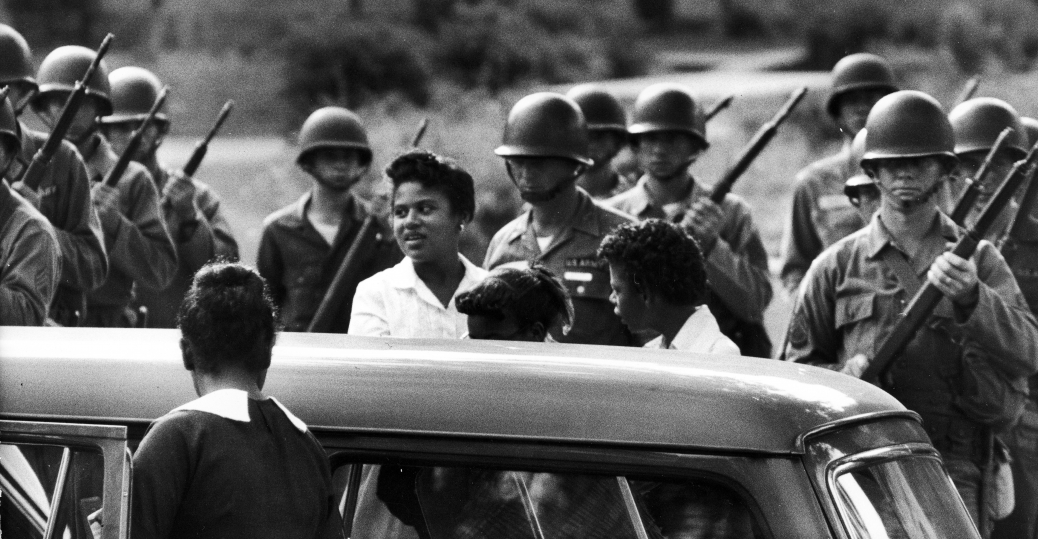
Integration of Central High School by the Little Rock Nine.

Oceti Sakowin is the Camp of the Seven Council Fires and is directed by ceremonial prayer, expressed in sacred ritual by the elders, embedded in the tribe’s ancient connection to primary source through dreams, knowing and conversation.

They may be informed by Native Vietnam vets, outsiders trained and experienced in protest strategies, those educated in the practice and consequences of colonialism, oppression, patriarchy and genocide, as evidenced in the trainings for camp residents, but ultimately actions are determined by the highest most sacred guidance.

This is a peaceful protest. Arrests weren’t part of the plan. There are outlying camps and some individuals who sometimes act independently, but only the Council speaks for the tribe. And now that the tribe knows arrests can occur within the most peaceful of practices, they plan for them, in order to protect people.

They’re allowing us, white and generally untutored in their ways, into this on-going, powerful ceremony, if we’ve come to serve.

Next:  Standing Rock: Camp Etiquette

.

2015 in review

Standard

The WordPress.com stats helper monkeys prepared a 2015 annual report for this blog.

Here’s an excerpt:

A San Francisco cable car holds 60 people. This blog was viewed about 400 times in 2015. If it were a cable car, it would take about 7 trips to carry that many people.

Click here to see the complete report.

The Snake

Standard

Water drops on blue background

From Jumping: a Novel.
Babe, on the arrival of her sisters. [I have three sisters.]

“I remember seeing a snake come down from the porch roof of a cabin I was staying in with friends. As we watched, it extended half of its length down through space as if the space had substance to support it, leaving its other half anchored on the porch roof. It lowered that front half right into a fir tree leaning against the porch, into the nest of a small mourning dove, a nest clearly visible to our group on the porch, a nest with two small eggs in it.
The dove had left the nest, probably because we had scared her off by coming out on the porch, and the snake had seen its chance. It moved into the nest with half of its body still on the porch roof, and swallowed both eggs, so quickly, so effortlessly, I could almost believe it hadn’t happened. I didn’t want to believe it had. Then it withdrew itself back up onto the roof, again as if suspended by invisible wires, and disappeared from sight. We stood there, silenced by the finality of its act. . . .
“Later I found a snakeskin tucked in the fold of the bottom step of the back porch. It was beautiful, elegant, like a woman’s elbow-length opera glove, dropped unheedingly, while she was on her way to somewhere else. . . .”