The book’s business

Standard

I gather my stories–

The Other Side of Resistance: Stories of Living Beyond Dying is written around eight stories of mine.

Not just any stories. It’s not a memoir.

These are stories I tell.

I claim them as “mine” for a few reasons. Not because the stories “happened” to me but because they came to me. Maybe repeatedly, in dreams as real as the point of death. Maybe in broad daylight, with a sense of time and place as real as the kitchen I stand in. They “happened” to someone else, but I stood in their world, seeing and hearing and smelling and feeling it just as it happened to them, as if it happened to me.

I tell them because of the compelling feeling of immediacy, significance, and truth they carry. I’m caught in the primacy of experience with them and it resonates through me. That resonance, which carries the excitement of a party, is the arrival of the opportunity the experience holds for me. This is the reason I believe the stories come.

I don’t believe I’m alone in the experience of stories and variations of stories, either.

I believe you can gather yours–stories caught in coincidences and synchronicities, daydreams and night dreams, epiphanies, deja vu, clairvoyance, and sudden knowings–to see what their uniting tells you.

Why we’d do it–the gathering of them, the juxtapositioning of them, creates another story. It’s like doing a reading of seven tarot cards rather than reading just one. Each informs the whole. For example, I put together what could be considered “past life” stories, one set in the French Revolution and one in a medieval English field. They led me to a story about the Twin Towers’ jumpers on September 1, 2001.

You get your own proof of a larger, more encompassing story of life, outside the mainstream story we’re all been taught. For example, I could no longer believe in death after sharing the stories of some who had died. Yes, we leave this “now” life, but I could see that we enter a larger field of activity. In this “now” life, the stories give us real equipment for living this “now,” rather than following a social or cultural model or someone else’s advice for what to believe and how to live.

The idea is that the stories are not random tales that crop up at unpredictable times for no reason. I began to see that hey are guidance that comes at our request, when we need it. They show us where we want to go and how to lead ourselves there.

Those stories come for their own reasons, too. There’s a reciprocity of resonance in operation that benefits all sides.

So, it seems useful to know our own stories.

And exciting, as it expands my understanding of how extensive our reach is across more connections than we can imagine.

Tomorrow we’ll start with a story.

“…if I had my goddam choice…”

Standard

?????????????????????????????????????????????????????????????????????????????????
“You know what I’d like to be?” I said. “I mean if I had my goddam choice?…I keep picturing all these little kids playing some game in this big field of rye and all…And I’m standing on the edge of some crazy cliff. What I have to do, I have to catch everybody if they start to go over the cliff–I mean they’re running and they don’t look where they’re going I have to come out from somewhere and catch them. That’s all I’d do all day. I’d be the catcher in the rye…”
Catcher in the Rye, JD Salinger
Who wouldn’t like to have written that? You can hardly put into words everything he’s caught in those lines–every bit of longing and need, every bit of hope, every bit of love. We want to know Holden, and we think we do.
I don’t think JD Salinger even wanted the fame and fortune that book brought him. What he wanted was to write it.

The death of the sun

Standard

better chimney pots

“Smoke lowering down from chimney-pots, making a soft black drizzle, with flakes of soot in it as big as full-grown snow-flakes–gone into mourning, one might imagine, for the death of the sun.”
Chapter One, Bleak House,Charles Dickens.

Written for profit? For an audience? For fame? Maybe. But I think you can see and feel his love for and enjoyment of writing in every word. You can open his book anywhere and find sentences like this one.

I know, we can’t all write like a Dickens (I can’t), but isn’t this the underlying goal? To try to?

And it’s a murder mystery, not a lofty book on social justice. One reviewer said of the main character, “Bucket can claim to be the first detective proper in English fiction…with his fat forefinger, his false bonhommie, his omniscience and his indifference to everything other than solving the crime.”

Dickens was one of eight children, raised in poverty, with little formal education.

“Two coyotes looking for afterbirths…”

Standard

“Two coyotes looking for afterbirths trotted through a pasture to the east, moving through fluid grass, the sun backlighting their fur in such a way that they appeared to have silver linings.”–from Pulitzer Prize winning author Annie Proulx, in That Old Ace in the Hole.
coyote-stalk-by-wildphotons

When people argue about writing for pleasure or writing for profit or writing for the audience, I think about sentences like that. People writing to capture truth, to lay it out to see if it moves you the way it moved them. To see if it leaves you vulnerable.

https://www.google.com/url?sa=i&rct=j&q=&esrc=s&source=images&cd=&cad=rja&uact=8&ved=0CAYQjB0&url=https%3A%2F%2Fhoundwelfare.wordpress.com%2Ftag%2Fcoyote-population%2F&ei=avsiVcm9B8PyoASNtoG4CA&psig=AFQjCNH-uTAryliKPWfkhHZL23QbdNOL8A&ust=1428441631301951

“This your girl?”

Standard

this your girl
“I’m my mother’s girl,” she said drily.
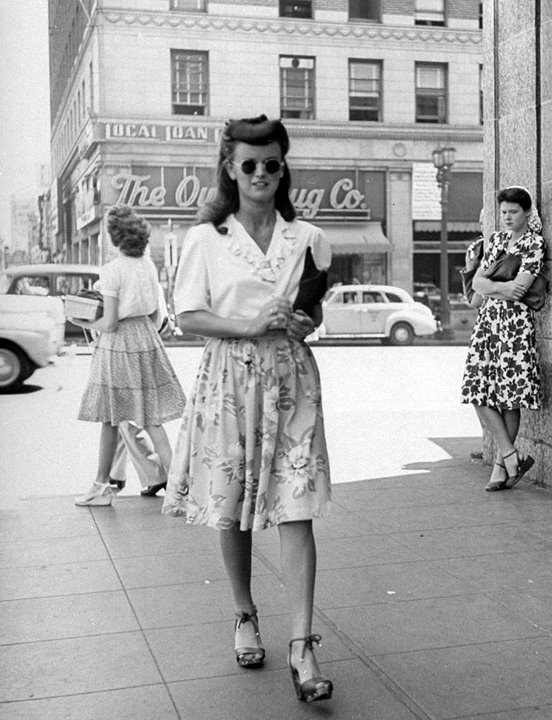
Lines I love. It’s from an old movie.
So is this one:
“You should see her shoes.”
Look how much we know from that.
From a Taxi episode:
“I guess I’m in trouble when I start talking to the furniture,” Alex says.
“You’re in trouble when it goes to the door and scratches to get out,” Jim says, looking at the furniture.
From Anne Lamott:
She had such an epiphany, “I know I’ll be dating the Dalai Lama.”
A Native American proverb:
“As you go the way of life, you will see a great chasm. Jump. It is not as wide as you think.”
In a title for an article:
“Improvised Shakespeare theater company creates a fully improvised play in Elizabethan style two nights a week.”
In a medical article:
They’ve created a “beat-less artificial heart.”

Photo: http://knightleyorelton.blogspot.com/2010/02/look-out-in-blackout.html

Liking our Female Characters II

Standard

Carrie Jean in Jumping:

“We were both tall, like our mother. Made for horses, Granny said. She kept our hair like she had our mother’s, according to tradition, long and never cut.”

“I don’t know our heritage for sure. I think we’re Algonquin and Sioux and Navajo, but I think there’s some African slave and French Canadian in there, too, and maybe even some Irish. You tell me what to make of it. Maybe it’s no different for you.”

“I have lots of Void stories. The Tribe watches over the Void. At night, I stand in the dark, watching the Void breathe. The ground swells as it draws breath and sinks when that breath is expelled in a shower of colorful living sparks that shoot far up into the night sky.  The Ancestors, our larger Tribe, come from the Void to watch, colorful and glowing in the dark themselves. ‘Those are messages for those searching,’ they tell me, pointing at the disappearing sparks, ‘so their hearts don’t become empty shelters for anyone’s messages.'”

I think good female characters are messengers themselves, telling us what we need to know so that we don’t go too badly astray. We get the message not just from who they are when they step into our story, but as we learn who they are in their entirety–past and present, and who they might become as this story unfolds.

Carrie Jean is a main character in Jumping. She calls herself a part-time Indian (a term from Sherman Alexie) because she’s still working out the tribal intermarriages, displacements, abandonments, and the conflicting stories that give them context.  She’s lost more family than she’s kept, and she’s a recovering griever, recovering the wisdom bound up in the experiencing of all those losses. We witness who she is becoming as she spends time in the company of the Void, wondering if she will find her family there. She knows the Void is a keeper of all that we lose–either because we tossed it away or because it left before we knew to stop it.

I’m caught up in who she is becoming. I like her.