The book’s business

Standard

I gather my stories–

The Other Side of Resistance: Stories of Living Beyond Dying is written around eight stories of mine.

Not just any stories. It’s not a memoir.

These are stories I tell.

I claim them as “mine” for a few reasons. Not because the stories “happened” to me but because they came to me. Maybe repeatedly, in dreams as real as the point of death. Maybe in broad daylight, with a sense of time and place as real as the kitchen I stand in. They “happened” to someone else, but I stood in their world, seeing and hearing and smelling and feeling it just as it happened to them, as if it happened to me.

I tell them because of the compelling feeling of immediacy, significance, and truth they carry. I’m caught in the primacy of experience with them and it resonates through me. That resonance, which carries the excitement of a party, is the arrival of the opportunity the experience holds for me. This is the reason I believe the stories come.

I don’t believe I’m alone in the experience of stories and variations of stories, either.

I believe you can gather yours–stories caught in coincidences and synchronicities, daydreams and night dreams, epiphanies, deja vu, clairvoyance, and sudden knowings–to see what their uniting tells you.

Why we’d do it–the gathering of them, the juxtapositioning of them, creates another story. It’s like doing a reading of seven tarot cards rather than reading just one. Each informs the whole. For example, I put together what could be considered “past life” stories, one set in the French Revolution and one in a medieval English field. They led me to a story about the Twin Towers’ jumpers on September 1, 2001.

You get your own proof of a larger, more encompassing story of life, outside the mainstream story we’re all been taught. For example, I could no longer believe in death after sharing the stories of some who had died. Yes, we leave this “now” life, but I could see that we enter a larger field of activity. In this “now” life, the stories give us real equipment for living this “now,” rather than following a social or cultural model or someone else’s advice for what to believe and how to live.

The idea is that the stories are not random tales that crop up at unpredictable times for no reason. I began to see that hey are guidance that comes at our request, when we need it. They show us where we want to go and how to lead ourselves there.

Those stories come for their own reasons, too. There’s a reciprocity of resonance in operation that benefits all sides.

So, it seems useful to know our own stories.

And exciting, as it expands my understanding of how extensive our reach is across more connections than we can imagine.

Tomorrow we’ll start with a story.
Standing Rock: Why I’m glad I went

Standard

turkey vultures

I’m glad I went and am thinking about going back. Yes, I blogged that it can be hard to be a white person at Standing Rock. But I loved every minute of it. Why?

Because it’s a rare and important opportunity to stand with people having the courage to speak truth to power, at great risk to their lives and well being. It’s a skill we all need to exercise, maybe particularly now. I am grateful to have seen it, and honor it in my own prayers.

It’s very scary. To see authority out of control, ruled by some adolescent notion of domination, able to randomly mace senior citizens in the face, is so completely opposite of their standing as law enforcement and peace officers. It’s such a betrayal of the public trust that it could only be described as a monumental selling out to the highest bidder.

And, in the face of it, I’m grateful to see how a people can still live prayer, day in and day out, in all that they do. It’s not something they put on and take off. It’s something they are, because they’re steeped in it.

And there’s a power that comes with living outside most of every day that we forget. That river is an ancient and knowing force in their lives, not an unseen convenience like running water is for most of us. When I would wake up at night, with Mother Earth beneath me and Father Sky above me, and the moon reflecting on the river running just beyond our camp, I felt such a part of all that is most important about our world.

DR jumping
The Native concern for the next seven generations of life always makes me think of my grandson, fearlessly ready to jump into the world.

2015 in review

Standard

The WordPress.com stats helper monkeys prepared a 2015 annual report for this blog.

Here’s an excerpt:

A San Francisco cable car holds 60 people. This blog was viewed about 400 times in 2015. If it were a cable car, it would take about 7 trips to carry that many people.

Click here to see the complete report.

“Two coyotes looking for afterbirths…”

Standard

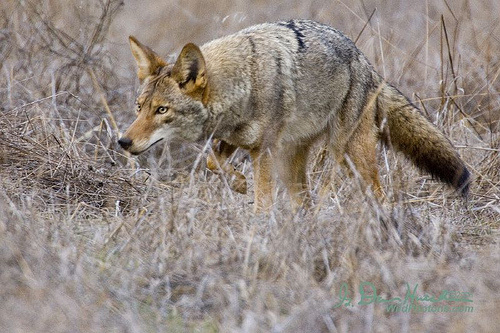
“Two coyotes looking for afterbirths trotted through a pasture to the east, moving through fluid grass, the sun backlighting their fur in such a way that they appeared to have silver linings.”–from Pulitzer Prize winning author Annie Proulx, in That Old Ace in the Hole.
coyote-stalk-by-wildphotons

When people argue about writing for pleasure or writing for profit or writing for the audience, I think about sentences like that. People writing to capture truth, to lay it out to see if it moves you the way it moved them. To see if it leaves you vulnerable.

https://www.google.com/url?sa=i&rct=j&q=&esrc=s&source=images&cd=&cad=rja&uact=8&ved=0CAYQjB0&url=https%3A%2F%2Fhoundwelfare.wordpress.com%2Ftag%2Fcoyote-population%2F&ei=avsiVcm9B8PyoASNtoG4CA&psig=AFQjCNH-uTAryliKPWfkhHZL23QbdNOL8A&ust=1428441631301951

We want to know.

Standard

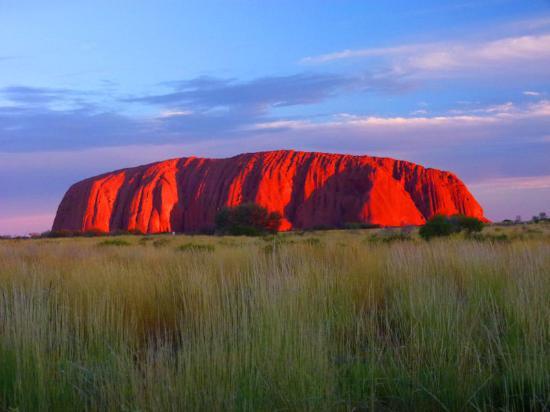
uluru-at-sunset

Taller than the Eiffel Tower, in a flat, desert area in the center of Australia. Eight miles around. More than 600 million years old.

uluru-anangu

Sacred places–unknown forces are at work to activate space with spirit. They hold things we want to know. Some of us believe we are meant to know. Some of us have a passion to know.

Photos:
image: http://media-cdn.tripadvisor.com/media/photo-s/02/49/5d/53/uluru-at-sunset.jpg
artwork: http://sites.coloradocollege.edu/indigenoustraditions/files/2011/11/uluru-anangu.jpg

Turkey Vultures

Standard

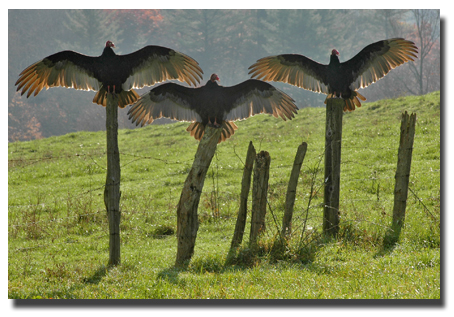
One morning, when I was staying up country in a valley of the Manzano Mountains, I got up early to see the sun rise. I went out on the deck, and as I looked across the field, I saw about a dozen turkey vultures, each perched on a fence post.
turkey vultures

They stood with wings outstretched, unmoving, waiting to catch the sun’s rays, to warm their wings. It was a surreal sight, as if they were caught in a moment of worship.

It made me think of turkey vultures differently, to feel a kinship with them. We both were in that moment to appreciate something ancient and foundational that is rejuvenating to something deep within us. For that moment, we were worshiping at the same church.

Now when I see them surrounding road kill, I don’t go, “Ew-w-w!”

Photo from: http://blueridgeblog.blogs.com/blue_ridge_blog/2004/10/taking_flightpa.html

2014 in review–What was I thinking?

Standard

I have no idea what I was thinking. Now I can see that honestly following the course of my book, from my hands out into the world, garnered a few people’s interest. That, along with the tarantula migration I  witnessed. That goes without saying, of course, since who wouldn’t be interested in a tarantula migration?

Anyway, food for thought for the coming year. Here’s to everybody having a great one!

The WordPress.com stats helper monkeys prepared a 2014 annual report for this blog.

Here’s an excerpt:

A San Francisco cable car holds 60 people. This blog was viewed about 520 times in 2014. If it were a cable car, it would take about 9 trips to carry that many people.

Click here to see the complete report.

Can you teach? Can anybody?

Standard

improvised-shakespeare-company
I used to teach, and for a long time, I tried to do it “their” way–the ones who taught us: construct your lectures from primary sources and the most current research, insert them into the teaching space/arena, repeat. It’s okay not to allow questions.
Look what happens if you allow questions–things can go anywhere. Can you bring them back? Can anybody? What about that point to be made? So why would you ever allow questions?
But there were a few insurrectionists, like the film teacher, and you could find out that some people allowed that kind of pandemonium in their classrooms. Of course, they were labelled kooks or unprepared or just not very smart. And you told yourself only some subjects permitted it.
But my own teaching began to bore me and I felt more and more like a fraud, standing up there delivering “the word.”
So, gradually I couldn’t help myself, and I began to allow questions. Well, all hell broke lose. They had opinions that challenged my “established knowledge,” many of them said the first un-thought thing that popped into their heads, some felt they had “the word” because they were in touch with the media–social and otherwise, some were just full of themselves. But more than a few were about more than themselves and made me think, and for a while I flew by the seat of my pants with them.
That became my definition of teaching–teacher and student flying by the seat of their pants. They begin in the realm of the subject matter at hand and see where it takes them. Both can end up going somewhere neither have been. And it’s fun.
I think it’s how the best writing happens–a conversation with you and your muse/source/etc.
I liken the process to improv, a practice that hands us back ourselves, often through a process of standing up to our own immense fear of exactly that.
The only thing to be nervous about, as one long form improviser said, “is the potential for large-scale humiliation.”

See Patrick Stewart talk about improvising Shakespeare: http://americantheatre.org/2014/11/how-patrick-stewart-learned-to-die-onstage/

Tarantula Migration–Can they get in the car?

Standard

tarantula2

I lived in Roswell, NM, for about five years. I managed an HIV agency that served the southeastern quadrant of the state, 33,000 square miles, which was pretty impossible, with about 126 clients, so I did a lot of driving on little-traveled roads.
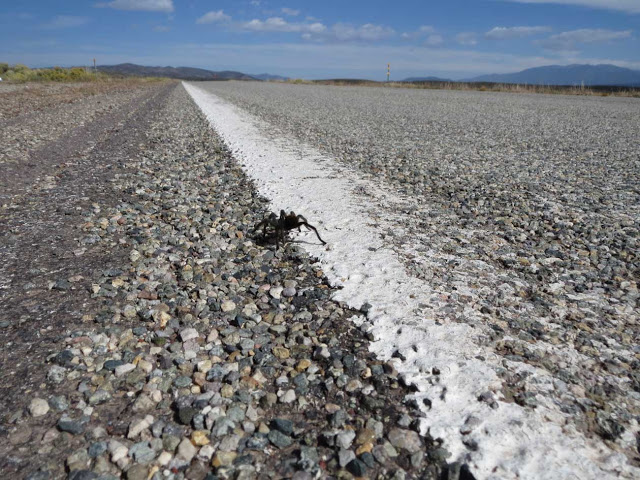
One night, driving home late, I was brought out of my usual driving stupor by catching sight of lots of small crawling things on the road. Tarantulas! I slowed but couldn’t help running over some of them and began to wonder if they could get into the car. What are they running from? Was it the end of the world? Would I be swarmed by them?
I didn’t know it at the time, but it was the annual tarantula migration. The males go in search, in mass, for female companionship. I couldn’t have imagined such a thing–except in a nightmare. I was horrified.
I later learned that a tarantula bite probably won’t kill you. I learned, too, that they’re gentle arachnids, nocturnal and shy, despite how scary they look.
I saw lots of other living things on the back roads I traveled–ring-tailed cats (just like out of Dr. Seuss), badger families, crowds of migrating jack rabbits lining the road, petite silver wolves, hawks, eagles–but I always remembered the tarantulas. Alone as I was, in the dark, being surrounded by lots of spiders (one of my worst fears), knowing I just had to get through it, wondering if it was a dream.
Lots of people think that part of NM is a wasteland, devoid of life, a desert. But it’s full of life, going about its business, searching for other like-minded partners, like we do.
What else don’t we know?

Photo from: rebeccamezoff.blogspot.com

Tasmania–running into the other you

Standard

launceston
Excerpt from Jumping: a Novel.
Babe has jumped into the Void and is meeting an aspect of herself whom she almost met in life:

One of them is a woman I saw once, in Tasmania. I’m surprised to see a woman with whom I have had only one encounter, and we never even spoke. . . .

I take in the woman, who looks strikingly like me, and remember seeing her in the crowd of evening strollers along the pier one night, on the Tamar River. . . I felt so strangely drawn to follow this woman, knowing there was some sort of connection, and hoping she knew it, too.

I think she was afraid of me—she noticed me, but only peripherally, and wouldn’t look at me head-on. I was a little freaked out—knowing she was me somehow, some other version of me. I wanted to see her and have her see me, as validation of something, but at the same time I felt as if something irrevocable would change, and I didn’t know if I was ready for that. I think she felt the same way.

The woman approaches. The silence lingers.

“Babe, this is Hardin,” Philip says, just as I’m thinking the name in my head.

“I know.”

Hardin and I hug. And Hardin, laughing, says, with a distinct Australian accent, “Of course, I did see you. I’m an aspect of you and you of me. It was my first time to ever see such a thing. I wasn’t well at the time, and I thought seeing you meant immanent death!” She laughs again, “I know now that’s not the case. And I’m sorry to have missed the opportunity, but I was a frightful little thing in that life. Not like you!”

“Oh, I was scared, too!” I reassure her.