The book’s business

Standard

I gather my stories–

The Other Side of Resistance: Stories of Living Beyond Dying is written around eight stories of mine.

Not just any stories. It’s not a memoir.

These are stories I tell.

I claim them as “mine” for a few reasons. Not because the stories “happened” to me but because they came to me. Maybe repeatedly, in dreams as real as the point of death. Maybe in broad daylight, with a sense of time and place as real as the kitchen I stand in. They “happened” to someone else, but I stood in their world, seeing and hearing and smelling and feeling it just as it happened to them, as if it happened to me.

I tell them because of the compelling feeling of immediacy, significance, and truth they carry. I’m caught in the primacy of experience with them and it resonates through me. That resonance, which carries the excitement of a party, is the arrival of the opportunity the experience holds for me. This is the reason I believe the stories come.

I don’t believe I’m alone in the experience of stories and variations of stories, either.

I believe you can gather yours–stories caught in coincidences and synchronicities, daydreams and night dreams, epiphanies, deja vu, clairvoyance, and sudden knowings–to see what their uniting tells you.

Why we’d do it–the gathering of them, the juxtapositioning of them, creates another story. It’s like doing a reading of seven tarot cards rather than reading just one. Each informs the whole. For example, I put together what could be considered “past life” stories, one set in the French Revolution and one in a medieval English field. They led me to a story about the Twin Towers’ jumpers on September 1, 2001.

You get your own proof of a larger, more encompassing story of life, outside the mainstream story we’re all been taught. For example, I could no longer believe in death after sharing the stories of some who had died. Yes, we leave this “now” life, but I could see that we enter a larger field of activity. In this “now” life, the stories give us real equipment for living this “now,” rather than following a social or cultural model or someone else’s advice for what to believe and how to live.

The idea is that the stories are not random tales that crop up at unpredictable times for no reason. I began to see that hey are guidance that comes at our request, when we need it. They show us where we want to go and how to lead ourselves there.

Those stories come for their own reasons, too. There’s a reciprocity of resonance in operation that benefits all sides.

So, it seems useful to know our own stories.

And exciting, as it expands my understanding of how extensive our reach is across more connections than we can imagine.

Tomorrow we’ll start with a story.
Exploring the Other Side: Beyond Life Experiences

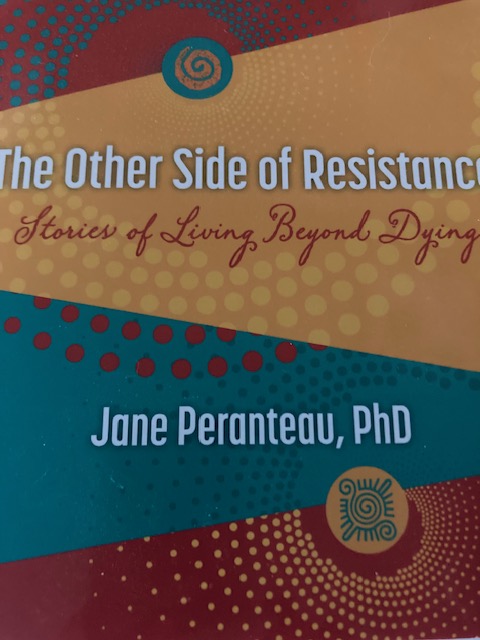
The working cover of the manuscript to be presented serially.
Standard

Most of us have been touched by “the other side” at one time or another in our lives.

In 2014, my first book, Jumping: a Novel, was published by Hampton Roads. It is the story of a boy who turns twenty-one and jumps into a bottomless void at the edge of town. It won their 2014 Next Best Fiction Writer contest.  They put it in the category of contemporary fantasy, a category I knew nothing about and never would have expected to be writing in if I had known about it. 

It came anyway.

Jumping paved the way for its pushy sister, The Other Side of Resistance: Stories of Living Beyond Dying. It’s non-fiction, filled with my own stories of contact with “the other side,” though I’m no expert on after-life experiences, or near-death experiences, or reincarnation experiences.

It came anyway.

So, what did I learn?

  • We don’t come into this world as a blank slate.
  • I’m an example of how we come prepared. We come prepared to take a risk, to share our truest stories, to be a resource, to be part of the solution.
  • We don’t do it alone. We come connected to guidance, on “the other side.”
  • The other side has something to say.

“The crisis in your time is the greatest to be faced in recorded history . . . It needs to be, to provide the energy to propel you–to propel us–to the next stage in human development. And here is where we burst categories. That is what a transformative crisis does–it bursts categories. From the far side of the crisis there is no going back, because everything is different. You are different. . . . What can the defining crisis of your time be but a spiritual one?”  (The Guys Upstairs, Frank DeMarco, 2025)

The time is now, if we’re ever going to do it.

2015 in review

Standard

The WordPress.com stats helper monkeys prepared a 2015 annual report for this blog.

Here’s an excerpt:

A San Francisco cable car holds 60 people. This blog was viewed about 400 times in 2015. If it were a cable car, it would take about 7 trips to carry that many people.

Click here to see the complete report.

“…if I had my goddam choice…”

Standard

?????????????????????????????????????????????????????????????????????????????????
“You know what I’d like to be?” I said. “I mean if I had my goddam choice?…I keep picturing all these little kids playing some game in this big field of rye and all…And I’m standing on the edge of some crazy cliff. What I have to do, I have to catch everybody if they start to go over the cliff–I mean they’re running and they don’t look where they’re going I have to come out from somewhere and catch them. That’s all I’d do all day. I’d be the catcher in the rye…”
Catcher in the Rye, JD Salinger
Who wouldn’t like to have written that? You can hardly put into words everything he’s caught in those lines–every bit of longing and need, every bit of hope, every bit of love. We want to know Holden, and we think we do.
I don’t think JD Salinger even wanted the fame and fortune that book brought him. What he wanted was to write it.

The death of the sun

Standard

better chimney pots

“Smoke lowering down from chimney-pots, making a soft black drizzle, with flakes of soot in it as big as full-grown snow-flakes–gone into mourning, one might imagine, for the death of the sun.”
Chapter One, Bleak House,Charles Dickens.

Written for profit? For an audience? For fame? Maybe. But I think you can see and feel his love for and enjoyment of writing in every word. You can open his book anywhere and find sentences like this one.

I know, we can’t all write like a Dickens (I can’t), but isn’t this the underlying goal? To try to?

And it’s a murder mystery, not a lofty book on social justice. One reviewer said of the main character, “Bucket can claim to be the first detective proper in English fiction…with his fat forefinger, his false bonhommie, his omniscience and his indifference to everything other than solving the crime.”

Dickens was one of eight children, raised in poverty, with little formal education.

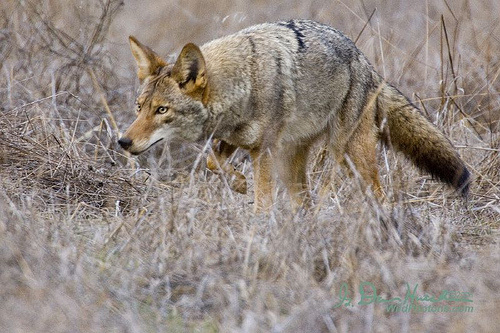
“Two coyotes looking for afterbirths…”

Standard

“Two coyotes looking for afterbirths trotted through a pasture to the east, moving through fluid grass, the sun backlighting their fur in such a way that they appeared to have silver linings.”–from Pulitzer Prize winning author Annie Proulx, in That Old Ace in the Hole.
coyote-stalk-by-wildphotons

When people argue about writing for pleasure or writing for profit or writing for the audience, I think about sentences like that. People writing to capture truth, to lay it out to see if it moves you the way it moved them. To see if it leaves you vulnerable.

https://www.google.com/url?sa=i&rct=j&q=&esrc=s&source=images&cd=&cad=rja&uact=8&ved=0CAYQjB0&url=https%3A%2F%2Fhoundwelfare.wordpress.com%2Ftag%2Fcoyote-population%2F&ei=avsiVcm9B8PyoASNtoG4CA&psig=AFQjCNH-uTAryliKPWfkhHZL23QbdNOL8A&ust=1428441631301951

Amma hugs–I’ve had three. Why?

Standard

Amma
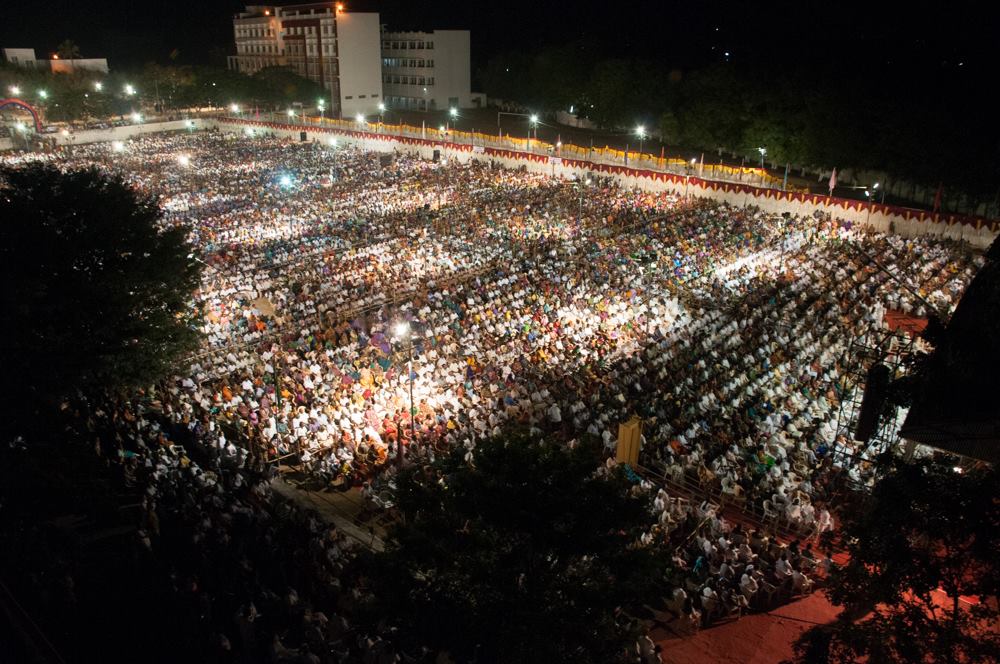
“Amma will embrace all these people tonight.”

‘My daughter, my daughter, my daughter,’ she says over and over in my ear.

I’m lost in the lap of something so much bigger than I am, and I rest there. All I can see is the folds of her white robe as I’m overwhelmed with the permeating scent of roses, which are everywhere. And then I’m falling out of the hug, as her attendants pull me back to put the next person in, pressing rose petals and strangely, a Hershey’s kiss into my hand.

I was charged with the energy of that hug for days after, hearing her words in my ear–‘My daughter, my daughter, my daughter.’

Once a year Amma, India’s hugging saint, comes to town. She arrives at a large hotel in Albuquerque that can accommodate the thousands who come for a hug, as crazy as that might sound. When you arrive, you remove your shoes, are organized into groups, given your hug number, fed and are presented with all kinds of memorabilia to buy, from photographs to clothes. While you wait for your group to be called, you listen to Indian music, are strewn with rose petals, watch multiple large-screen videos of Amma’s good works around the world, and look at everyone else who has come.

It all moves along smoothly. She and her team are experts at this–after all, she’s hugged more than 30 million people world wide, royalty and celebrities included.

When your group is called, you join a double line of people, in chairs, gradually moving forward, like musical chairs. Up ahead, Amma is dressed all in white, sitting on a sort of low throne, hugging people, one after another—families with babies, the old, the infirm, young people, people speaking different languages. When you’re finally next in line, her attendants move you to your knees a few feet from her, asking you what language you speak.

You’re sort of dropped into a tight group of front line attendants, dressed in yellow robes, who are plunging people into Amma’s lap and then dragging them out, in a claustrophobic frenzy. You’re in a feel-good, out-of-body daze as you’re pulled out.

At first I thought that wonderful feeling was from her, from what she has. After the third hug, I began to believe that we generate it together. She calls it forth, and what I feel is my soul answering.

Photo: Erode, Tamil Nadu, Monday, January 12, 2015

2014 in review–What was I thinking?

Standard

I have no idea what I was thinking. Now I can see that honestly following the course of my book, from my hands out into the world, garnered a few people’s interest. That, along with the tarantula migration I  witnessed. That goes without saying, of course, since who wouldn’t be interested in a tarantula migration?

Anyway, food for thought for the coming year. Here’s to everybody having a great one!

The WordPress.com stats helper monkeys prepared a 2014 annual report for this blog.

Here’s an excerpt:

A San Francisco cable car holds 60 people. This blog was viewed about 520 times in 2014. If it were a cable car, it would take about 9 trips to carry that many people.

Click here to see the complete report.

Can you teach? Can anybody?

Standard

improvised-shakespeare-company
I used to teach, and for a long time, I tried to do it “their” way–the ones who taught us: construct your lectures from primary sources and the most current research, insert them into the teaching space/arena, repeat. It’s okay not to allow questions.
Look what happens if you allow questions–things can go anywhere. Can you bring them back? Can anybody? What about that point to be made? So why would you ever allow questions?
But there were a few insurrectionists, like the film teacher, and you could find out that some people allowed that kind of pandemonium in their classrooms. Of course, they were labelled kooks or unprepared or just not very smart. And you told yourself only some subjects permitted it.
But my own teaching began to bore me and I felt more and more like a fraud, standing up there delivering “the word.”
So, gradually I couldn’t help myself, and I began to allow questions. Well, all hell broke lose. They had opinions that challenged my “established knowledge,” many of them said the first un-thought thing that popped into their heads, some felt they had “the word” because they were in touch with the media–social and otherwise, some were just full of themselves. But more than a few were about more than themselves and made me think, and for a while I flew by the seat of my pants with them.
That became my definition of teaching–teacher and student flying by the seat of their pants. They begin in the realm of the subject matter at hand and see where it takes them. Both can end up going somewhere neither have been. And it’s fun.
I think it’s how the best writing happens–a conversation with you and your muse/source/etc.
I liken the process to improv, a practice that hands us back ourselves, often through a process of standing up to our own immense fear of exactly that.
The only thing to be nervous about, as one long form improviser said, “is the potential for large-scale humiliation.”

See Patrick Stewart talk about improvising Shakespeare: http://americantheatre.org/2014/11/how-patrick-stewart-learned-to-die-onstage/

Tarantula Migration–Can they get in the car?

Standard

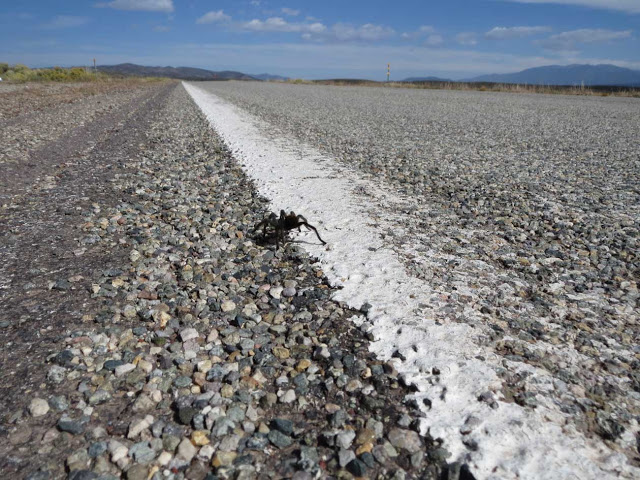
tarantula2

I lived in Roswell, NM, for about five years. I managed an HIV agency that served the southeastern quadrant of the state, 33,000 square miles, which was pretty impossible, with about 126 clients, so I did a lot of driving on little-traveled roads.
One night, driving home late, I was brought out of my usual driving stupor by catching sight of lots of small crawling things on the road. Tarantulas! I slowed but couldn’t help running over some of them and began to wonder if they could get into the car. What are they running from? Was it the end of the world? Would I be swarmed by them?
I didn’t know it at the time, but it was the annual tarantula migration. The males go in search, in mass, for female companionship. I couldn’t have imagined such a thing–except in a nightmare. I was horrified.
I later learned that a tarantula bite probably won’t kill you. I learned, too, that they’re gentle arachnids, nocturnal and shy, despite how scary they look.
I saw lots of other living things on the back roads I traveled–ring-tailed cats (just like out of Dr. Seuss), badger families, crowds of migrating jack rabbits lining the road, petite silver wolves, hawks, eagles–but I always remembered the tarantulas. Alone as I was, in the dark, being surrounded by lots of spiders (one of my worst fears), knowing I just had to get through it, wondering if it was a dream.
Lots of people think that part of NM is a wasteland, devoid of life, a desert. But it’s full of life, going about its business, searching for other like-minded partners, like we do.
What else don’t we know?

Photo from: rebeccamezoff.blogspot.com