The book’s business

Standard

I gather my stories–

The Other Side of Resistance: Stories of Living Beyond Dying is written around eight stories of mine.

Not just any stories. It’s not a memoir.

These are stories I tell.

I claim them as “mine” for a few reasons. Not because the stories “happened” to me but because they came to me. Maybe repeatedly, in dreams as real as the point of death. Maybe in broad daylight, with a sense of time and place as real as the kitchen I stand in. They “happened” to someone else, but I stood in their world, seeing and hearing and smelling and feeling it just as it happened to them, as if it happened to me.

I tell them because of the compelling feeling of immediacy, significance, and truth they carry. I’m caught in the primacy of experience with them and it resonates through me. That resonance, which carries the excitement of a party, is the arrival of the opportunity the experience holds for me. This is the reason I believe the stories come.

I don’t believe I’m alone in the experience of stories and variations of stories, either.

I believe you can gather yours–stories caught in coincidences and synchronicities, daydreams and night dreams, epiphanies, deja vu, clairvoyance, and sudden knowings–to see what their uniting tells you.

Why we’d do it–the gathering of them, the juxtapositioning of them, creates another story. It’s like doing a reading of seven tarot cards rather than reading just one. Each informs the whole. For example, I put together what could be considered “past life” stories, one set in the French Revolution and one in a medieval English field. They led me to a story about the Twin Towers’ jumpers on September 1, 2001.

You get your own proof of a larger, more encompassing story of life, outside the mainstream story we’re all been taught. For example, I could no longer believe in death after sharing the stories of some who had died. Yes, we leave this “now” life, but I could see that we enter a larger field of activity. In this “now” life, the stories give us real equipment for living this “now,” rather than following a social or cultural model or someone else’s advice for what to believe and how to live.

The idea is that the stories are not random tales that crop up at unpredictable times for no reason. I began to see that hey are guidance that comes at our request, when we need it. They show us where we want to go and how to lead ourselves there.

Those stories come for their own reasons, too. There’s a reciprocity of resonance in operation that benefits all sides.

So, it seems useful to know our own stories.

And exciting, as it expands my understanding of how extensive our reach is across more connections than we can imagine.

Tomorrow we’ll start with a story.

2015 in review

Standard

The WordPress.com stats helper monkeys prepared a 2015 annual report for this blog.

Here’s an excerpt:

A San Francisco cable car holds 60 people. This blog was viewed about 400 times in 2015. If it were a cable car, it would take about 7 trips to carry that many people.

Click here to see the complete report.

We want to know.

Standard

uluru-at-sunset

Taller than the Eiffel Tower, in a flat, desert area in the center of Australia. Eight miles around. More than 600 million years old.

uluru-anangu

Sacred places–unknown forces are at work to activate space with spirit. They hold things we want to know. Some of us believe we are meant to know. Some of us have a passion to know.

Photos:
image: http://media-cdn.tripadvisor.com/media/photo-s/02/49/5d/53/uluru-at-sunset.jpg
artwork: http://sites.coloradocollege.edu/indigenoustraditions/files/2011/11/uluru-anangu.jpg

Turkey Vultures

Standard

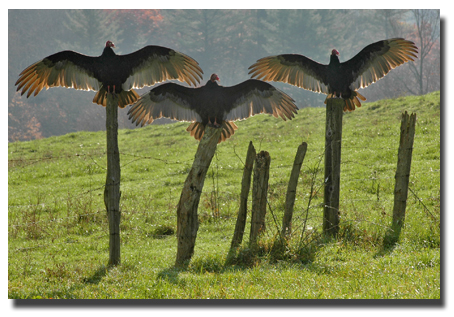
One morning, when I was staying up country in a valley of the Manzano Mountains, I got up early to see the sun rise. I went out on the deck, and as I looked across the field, I saw about a dozen turkey vultures, each perched on a fence post.
turkey vultures

They stood with wings outstretched, unmoving, waiting to catch the sun’s rays, to warm their wings. It was a surreal sight, as if they were caught in a moment of worship.

It made me think of turkey vultures differently, to feel a kinship with them. We both were in that moment to appreciate something ancient and foundational that is rejuvenating to something deep within us. For that moment, we were worshiping at the same church.

Now when I see them surrounding road kill, I don’t go, “Ew-w-w!”

Photo from: http://blueridgeblog.blogs.com/blue_ridge_blog/2004/10/taking_flightpa.html

Can you teach? Can anybody?

Standard

improvised-shakespeare-company
I used to teach, and for a long time, I tried to do it “their” way–the ones who taught us: construct your lectures from primary sources and the most current research, insert them into the teaching space/arena, repeat. It’s okay not to allow questions.
Look what happens if you allow questions–things can go anywhere. Can you bring them back? Can anybody? What about that point to be made? So why would you ever allow questions?
But there were a few insurrectionists, like the film teacher, and you could find out that some people allowed that kind of pandemonium in their classrooms. Of course, they were labelled kooks or unprepared or just not very smart. And you told yourself only some subjects permitted it.
But my own teaching began to bore me and I felt more and more like a fraud, standing up there delivering “the word.”
So, gradually I couldn’t help myself, and I began to allow questions. Well, all hell broke lose. They had opinions that challenged my “established knowledge,” many of them said the first un-thought thing that popped into their heads, some felt they had “the word” because they were in touch with the media–social and otherwise, some were just full of themselves. But more than a few were about more than themselves and made me think, and for a while I flew by the seat of my pants with them.
That became my definition of teaching–teacher and student flying by the seat of their pants. They begin in the realm of the subject matter at hand and see where it takes them. Both can end up going somewhere neither have been. And it’s fun.
I think it’s how the best writing happens–a conversation with you and your muse/source/etc.
I liken the process to improv, a practice that hands us back ourselves, often through a process of standing up to our own immense fear of exactly that.
The only thing to be nervous about, as one long form improviser said, “is the potential for large-scale humiliation.”

See Patrick Stewart talk about improvising Shakespeare: http://americantheatre.org/2014/11/how-patrick-stewart-learned-to-die-onstage/

The Snake

Standard

Water drops on blue background

From Jumping: a Novel.
Babe, on the arrival of her sisters. [I have three sisters.]

“I remember seeing a snake come down from the porch roof of a cabin I was staying in with friends. As we watched, it extended half of its length down through space as if the space had substance to support it, leaving its other half anchored on the porch roof. It lowered that front half right into a fir tree leaning against the porch, into the nest of a small mourning dove, a nest clearly visible to our group on the porch, a nest with two small eggs in it.
The dove had left the nest, probably because we had scared her off by coming out on the porch, and the snake had seen its chance. It moved into the nest with half of its body still on the porch roof, and swallowed both eggs, so quickly, so effortlessly, I could almost believe it hadn’t happened. I didn’t want to believe it had. Then it withdrew itself back up onto the roof, again as if suspended by invisible wires, and disappeared from sight. We stood there, silenced by the finality of its act. . . .
“Later I found a snakeskin tucked in the fold of the bottom step of the back porch. It was beautiful, elegant, like a woman’s elbow-length opera glove, dropped unheedingly, while she was on her way to somewhere else. . . .”

Life is to short to play it safe.

Standard

I discovered if you don’t regularly jump–off a porch, from a plane, into a new life–you’re not living. Life loses its juice and so do you. For every time I left town with a suitcase and never went back, I grew leaps as a human being–I think jumping is a shortcut to living. When do you feel more alive than when you take a risk, a life leap, a free fall?

Are you selling out when you sell yourself? Sure!

Standard

You can’t let it change you.  Then it’s not selling out.  But is that even possible?  Nowadays, if you’re a writer, you’re in sales.  We just used to think someone else would be doing it for us.

The other day, the 21 year old technical whiz who works with me and I produced the first draft of a video for youtube.  The publisher will either edit it and put it up or send us back to the drawing board.  Their marketing person said two minutes, don’t read, talk about the book, but don’t give it away.  Right now, we’re at five minutes and six seconds.  And we’ve got lots of out-takes.  A couple of times we got to laughing and almost couldn’t stop. The techie/director took care of lighting, sound, time, setting, wardrobe, hair frizzies, script management, feedback, production design, and more.  I supplied the script and showed up.  That was a lot!

I think the truth is my apprehension, at core, comes from the fact that I’m still getting to know the book.  I wrote it and moved on to the next one.  Now I look at it and try to remember.  I’m surprised and unsettled by the comments of others who’ve recently read it.  They’ve seen something I didn’t know was there and been moved by it.  The book is clearly a thing unto itself.

I will say, as I go back into Jumping, looking for things to quote or things for readings, I find a lot I remember and still like.  Maybe that’s because I know the book wasn’t written just by me.  Go, little book!


I’m in my own words now.

Standard

Last night, someone close to me who is reading Jumping said to me that so far Chapter 12 is his favorite, the most beautifully written.

It’s a description of one of the main characters–Miles, Duncan Robert’s uncle and a fellow jumper–and I’d thrown it in at the request of my editor, who wanted more background on Miles to explain the later anti-war stance he takes into the Void, into an epic battle scene.

I wrote that chapter straight as it came to me, not questioning it, not needing to edit it.  My editor didn’t touch it, either.

Now I see my words differently, because of what my friend said.

I’m in my own words now, not someone else’s. I haven’t been reading much since I’ve been writing.  I don’t think I was supposed to be reading, so I could steep in my own words for a change, after a lifetime of reading–since I was a child and won contests for reading the most books. I’d never let go of the words of others as the way, not seeing the power of my own words to set a life by.

No matter what happens to Jumping out there in the world, I see myself and my words differently.

I hope readers keep talking to me.


Like Jumping on Goodreads–or not

Standard

Goodreads-badge-add-plus

The largest site for readers and book recommendations.

https://www.goodreads.com/book/show/21543939-jumping?ac=1

It’s a really humbling proposition to see your book go up among a sea of other books and wonder about its ability to swim.  Was I a good teacher?  Anne Lamott says if it’s good enough, it’ll make it.  Now, rather than wondering if you’re in the smaller group of people who will actually finish a book and find a publisher, you’re back in a large group of writers who’ve all accomplished what you’ve accomplished.  So, you try to provide water wings, life preservers, and even cpr to keep this vessel holding what you believe is the best of you moving forward.  The further I extend this swimming metaphor, the harder it is to abandon it!

You’ll have to join Goodreads to recommend, review, or rate the book.  I’ve been a member for a while because I like sites that bring readers and books together.  Also, it’s an easy way to know what’s out there and what’s good, based on reader opinions.  And I like that you can ask any author (like Anne Lamott and many other famous ones) questions, and they answer.  I just agreed to answer questions, too.  So, use your own judgement.